
How to choose a waterproof jacket
Shell, showerproof or windshell? Find the right outer layer for the weather, the walk and what you wear underneath.
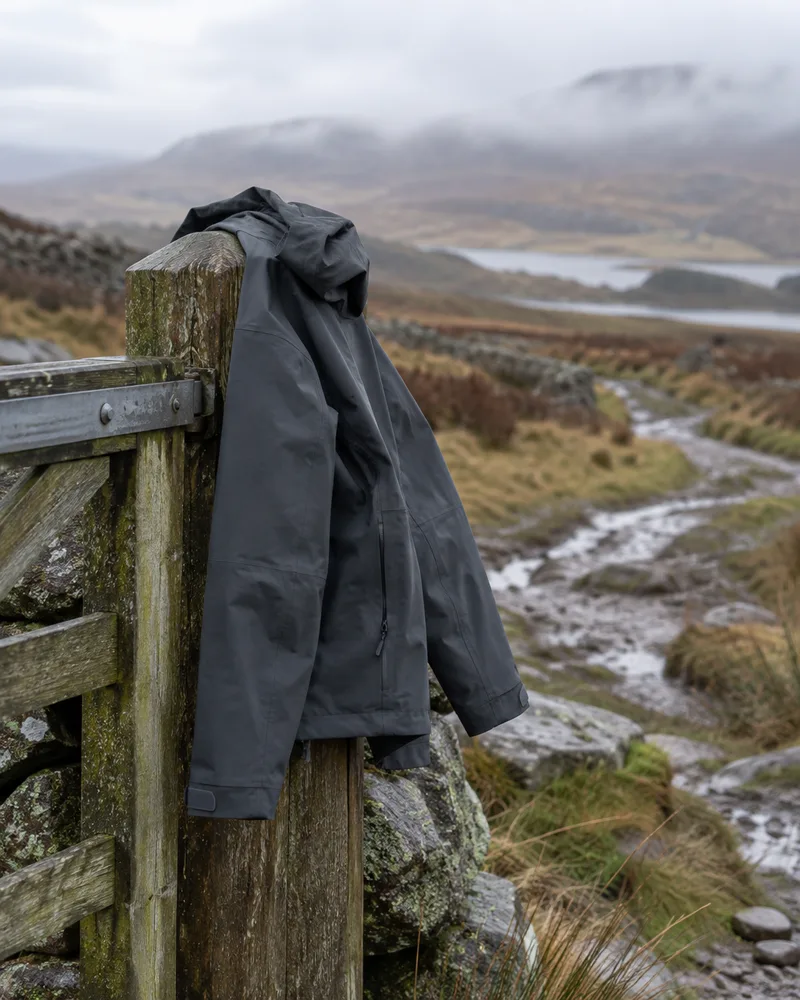
Start with the day you actually have planned
A short walk between showers and a full day on an exposed path ask different things of a jacket. Think about how long you will be outside, how hard you will be working and whether you can get indoors if the weather turns. For sustained rain, look for a waterproof shell with sealed seams. For brief showers, a lighter showerproof layer may be enough. For a breezy, mostly dry day, a windshell can be a useful extra. A jacket cannot make every forecast the same, but choosing the right type is a good start.
Waterproof, showerproof and wind resistant are different jobs
The Moorland Waterproof Shell, available in men's and women's cuts, is described in our catalogue as a fully taped three-layer shell. Its listed features include a 10,000mm waterproof rating, taped seams and an adjustable storm hood. Waterproof fabric is only part of the picture: seam sealing matters because stitching creates potential entry points for water. The Mizzle Packable Rain Jacket is described as showerproof, with an adjustable hood and a design that packs into its own pocket. Do not treat that description as the same promise as the Moorland's waterproof specification. The Hollow Lightweight Windshell is listed as wind resistant; it is not presented as a waterproof rain shell.
Read the rating without expecting a weather guarantee
A waterproof rating in millimetres describes a fabric's resistance to water pressure in a test. It is not a forecast of how many hours you can stay outside and does not describe the whole garment on its own. Design, seams, closures, wear and care all matter too. Breathability is a separate consideration, particularly when you are walking uphill. Our Moorland listing does not give a numerical breathability rating, so we do not invent one or promise that you will never feel warm inside it.
Make room for movement and a useful layer
Try a shell over the layers you expect to wear, not just a thin top. Reach forwards, lift your arms and bend your elbows: the shoulders and sleeves should allow comfortable movement. Check that you can adjust the hood without losing a clear view and that the cuffs and hem feel comfortable. A rain shell is an outer layer, not a substitute for insulation; add a suitable mid-layer when the day is cold. Choose the cut and size for your body and your intended layers rather than assuming that a label alone tells you the fit.
Keep the care advice specific to your jacket
Follow the garment's care label and the maker's instructions for washing, drying and any reproofing treatment. Do not guess a wash temperature or use a treatment merely because it worked on another coat. A water-repellent surface finish and the garment's waterproof construction are not the same thing; reduced beading on the surface is a reason to check the care instructions, not proof that every jacket needs replacing. Let wet kit dry properly before storing it.
Your quick shortlist
For a catalogue-listed waterproof shell with taped seams: start with the Moorland Waterproof Shell. For a light layer to keep in your bag for showers: look at the Mizzle Packable Rain Jacket. For wind protection rather than a waterproof promise: consider the Hollow Lightweight Windshell. Check each product's current listing, available size and selling price before choosing. Your best jacket is the one that suits the conditions you expect—not simply the one with the biggest number.